Print
Print




SCIENCE MADE SIMPLE
A Dutch study of more than 1,100 primary school students shows that children with better motor skills are more intensely active at recess, partly because they enjoy it more. Children with more prosocial behaviour also enjoy moving more, but they are not more active.
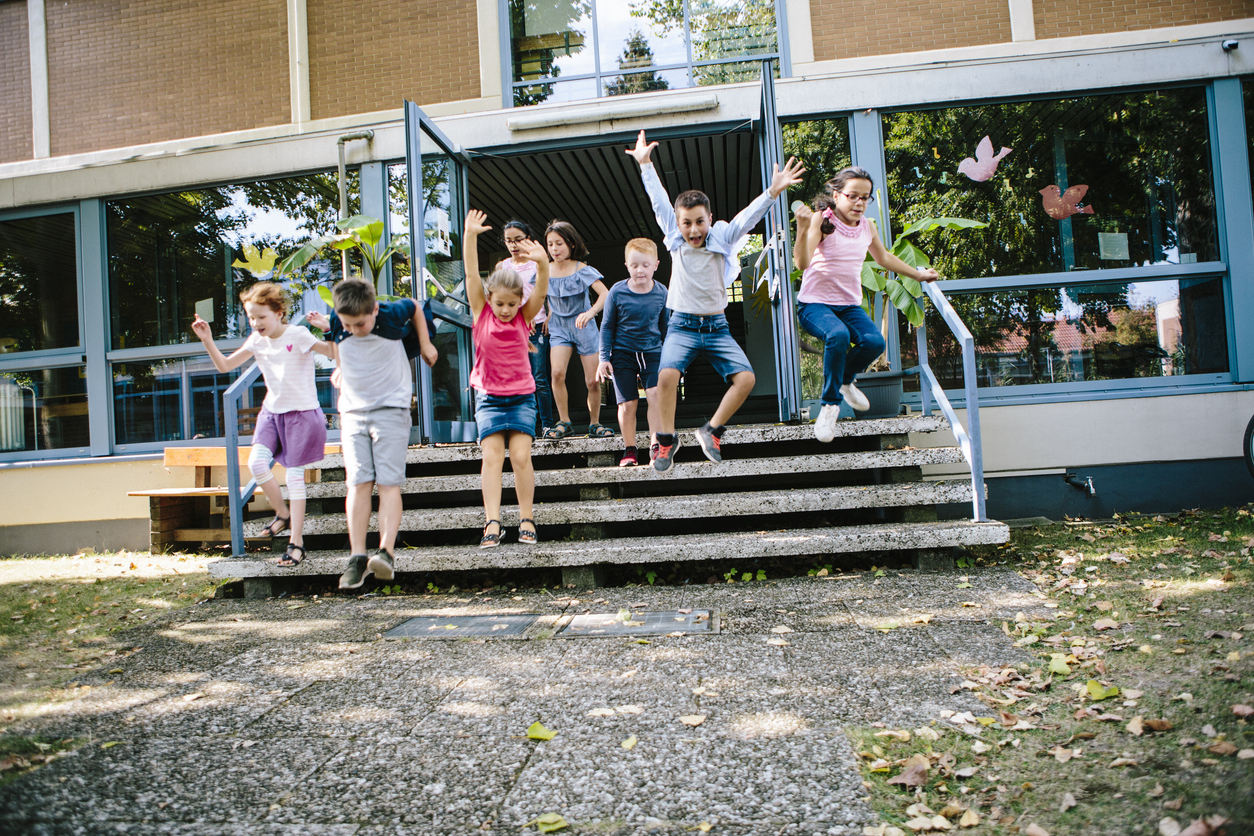
Meet Maya, nine years old. When the recess bell rings, her friends rush to the soccer field. Maya often stays near the wall. She does not really like chasing the ball: she feels slower than the others and often misses her passes. A few metres away, Sami runs, jumps, climbs and switches games at full speed.
Why do some children use recess to move a lot, while others stay rather quiet? This is the question two researchers from Vrije Universiteit Amsterdam, in the Netherlands, studied in a paper published in 2025 in the Journal of Sports Sciences.
Why focus on recess?
Moving every day is essential for children’s physical, social, emotional and cognitive development. The Canadian 24-Hour Movement Guidelines recommend that children and youth aged 5 to 17 get at least 60 minutes of moderate-to-vigorous physical activity per day. Yet many children do not reach this target.
Recess is a valuable opportunity: it happens every day, it is free, it often takes place outdoors and it reaches all children, whatever their background. But not all children use it in the same way. We still knew little about what makes a child move a lot, or very little, during recess.
How was the study done?
The researchers studied 1,154 students from Dutch primary schools, aged 9 years on average (about as many boys as girls). It is a cross-sectional study: each child was assessed at a single point in time, like a snapshot.
|
Light or vigorous activity: what is the difference? Light physical activity means moving without getting out of breath: walking, strolling, playing calmly while standing. Moderate-to-vigorous activity makes the heart beat faster and makes you a little out of breath: running, jumping, playing tag or ball games. It is mainly this kind of activity that counts toward the guidelines. |
For each child, the team measured four things:
-
Physical activity at recess: each child wore an accelerometer, a small sensor that records movement. Data from four recess periods were combined to estimate time spent in light activity and in moderate-to-vigorous activity.
-
Motor skills: with the Athletic Skills Track, a timed course that links basic skills such as running, jumping, crawling, throwing and catching.
-
Prosocial behaviour: reported by the teacher (SDQ questionnaire): sharing, helping, being kind to others.
-
Enjoyment of physical activity: children completed a questionnaire on how much they enjoy being physically active (Physical Activity Enjoyment Scale).
Statistical models were then used to see how these elements are linked, taking children’s age and gender into account.
What the researchers found
1. More skilled, more active
Children with better motor skills spent more time in moderate-to-vigorous activity during recess, and less time in light activity. In other words, they ran, jumped and played more intensely. On the other hand, children with weaker motor skills are at risk of moving little at recess.
2. Enjoyment is part of the link
Part of this link goes through enjoyment. More skilled children enjoyed moving more, and this enjoyment was itself linked to how active they were at recess. It makes sense: when you succeed at a movement, you want to do it again. When you feel clumsy, you tend to avoid active games. On average, children said they enjoyed moving a lot (about 4.2 out of 5).
3. Prosocial children enjoy moving… without moving more
Children described by their teacher as more prosocial (who share, help and cooperate) also enjoyed physical activity more. But, contrary to what one might expect, they were not more active during recess. Enjoyment is therefore not always enough: children also need the skills and the opportunities to get moving.
Correlation is not causation
Because the children were assessed at a single point in time, the study shows links, not causes. It is possible that good motor skills lead a child to move more. But the opposite is also plausible: a child who moves a lot gets more practice and becomes more skilled. The two effects most likely reinforce each other.
The study also has strengths: a very large number of children, an objective measure of activity with accelerometers and a hands-on motor test. However, it was carried out in the Netherlands, where schools and recess may be organized differently. The results will need to be confirmed elsewhere, including in Quebec.
Key takeaways for parents and professionals
-
Focus on fun. A child who enjoys moving is more likely to stay active. Praise effort, discovery and play rather than performance.
-
Offer a variety of recess activities. Skipping ropes, hopscotch, balls of different sizes, chasing games, climbing structures: the wider the choice, the more each child can find a game they like.
-
Pay attention to less skilled children. They are the most likely to move little. Games without elimination, small groups and challenges adapted to their level can help them gain confidence.
-
Build basic motor skills. Running, jumping, throwing, catching and balancing are practised in physical education, at the park and with family. These skills open the door to more active games.
-
Support without forcing. Recess supervisors and teachers can start a game, invite an isolated child to join the group or offer a role that fits the child.
-
Aim for 60 minutes a day. Recess can provide a good share of the 60 minutes of moderate-to-vigorous activity recommended every day for children and youth aged 5 to 17.
In conclusion
Let’s go back to Maya, near her wall. This study suggests that, to help her move more, simply telling her to go and play is not enough. She needs help to feel skilled and to enjoy moving: a game at her level, a friend who invites her, a ball that is easier to catch.
Recess is one of the few times when all children can move every day. By focusing on motor skills and enjoyment, we can make sure it benefits everyone, not just the most skilled children.
ODMP indexing
-
Article no.: 002
-
ODMP domains: Physical and motor; Affective (emotional); Social; Environment
-
Participants’ age: primary school students, 9 years on average
-
ODMP age group: 6-12 years
-
Study: cross-sectional; Netherlands; 1,154 participants
Study reference
de Bruijn, A. G. M., & Brocken, J. E. A. (2025). Motor and prosocial skills relate to enjoyment and physical activity levels during primary school recess. Journal of Sports Sciences, 43(15), 1532–1546. https://doi.org/10.1080/02640414.2025.2510096
To learn more: Canadian Society for Exercise Physiology, Canadian 24-Hour Movement Guidelines for Children and Youth (5–17 years), csepguidelines.ca.
Note: this plain-language article is based on the published abstract of the study (PubMed, PMID 40407097) and on excerpts from the full text. Results are presented qualitatively; detailed statistical coefficients are available in the original article.