Print



Common Vocabulary
When the Same Word Doesn’t Mean the Same Thing
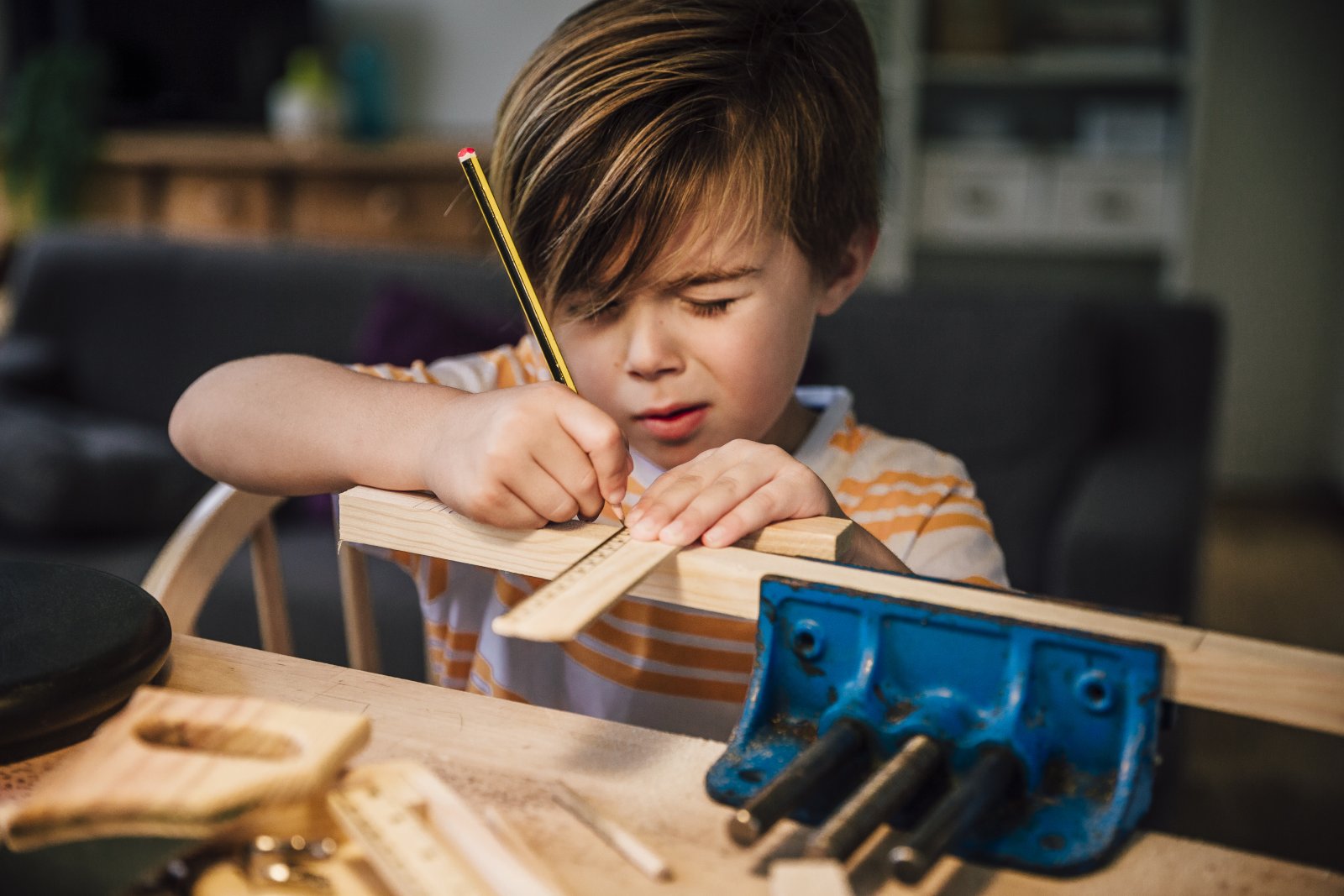
Imagine a meeting about a five-year-old child. His daycare educator says he “lacks coordination.” His kinesiologist talks about “motor control.” His physical education teacher mentions his “motor skills,” and his grandfather simply thinks he is “clumsy.” Everyone is observing the same child. Yet each person uses a different word, with a different nuance, and no one can be sure the others understand the same thing.
This situation is not unusual. The people who surround children come from many disciplines: early childhood, education, kinesiology, physical and health education, rehabilitation, research, and of course the family. Each has their own training, language habits and references. The result is familiar: different terms are used to describe similar concepts, and sometimes a single term covers distinct concepts.
This is precisely the need that gave rise to the project. Its goal is simple: to arrive at a common terminology in order to simplify and improve communication among people from different disciplines.
Why a common vocabulary changes everything
A shared vocabulary takes nothing away from anyone’s expertise. Rather, it provides a common point of reference that lets people understand each other before agreeing on what comes next. Here is what it changes in practice, depending on where you stand.
For parents and grandparents. The words professionals use can seem technical, even intimidating. A clear, carefully written definition makes it possible to understand what muscle tone, laterality or motor planning mean, to ask better questions and to take a full part in discussions about the child.
For practitioners and professionals. When the educator, the teacher, the kinesiologist and the occupational therapist give the same meaning to an expression, observations are passed on without distortion. Action plans become more consistent, referrals from one service to another become easier, and misunderstandings that waste time, or even erode trust, are avoided.
For students. During their training, future professionals encounter courses, textbooks and internship settings that do not always use the same terms. A reference vocabulary gives them a stable landmark for connecting what they learn and for entering their future practice with a language others will understand.
For researchers. Comparing studies depends on clearly defined concepts. When the same term is defined in several ways, it becomes difficult to combine, compare or reproduce results. A common language supports collaboration between teams and the circulation of knowledge.
In every case, the principle is the same: an expression should mean the same thing, whatever our professional title or our personal role in the child’s life.
How the vocabulary was built
This vocabulary is not the opinion of a single person. It rests on a multi-step process led by Alexandre Maltais, M.Sc., researcher at ÉCOBES, and Tommy Chevrette, Ph.D., Director of the Observatory, with financial support from the Table sur le mode de vie physiquement actif (TMVPA) and the Ministère de l’Éducation.
- Identifying and prioritizing terms. The team first drew up a list of the most commonly used terms in the field, then ranked them in order of importance.
- Literature search. The EBSCOhost and ProQuest platforms were searched across seven databases, including Academic Search Complete, CINAHL Plus with Full Text, MEDLINE with Full Text and SPORTDiscus with Full Text, as well as collections of theses and e-books. In total, 1,528 references were identified.
- Reading and extracting definitions. Articles, theses and dissertations were examined one by one to extract the definitions they proposed. For a term such as motor learning, about twenty references had to be read before reaching data saturation, that is, the point at which no genuinely new definition appears.
- Surveys. Three surveys were conducted with 120 people from 69 organizations, in order to test the definitions against field experience.
- Integrating feedback and final prioritization. The comments received were integrated to arrive at clear, consensus-based wording.
A sixth step, plain-language adaptation, is still to come. It will make these definitions even more accessible to the general public.
An approach inspired by PLaTO-Net
This project draws on an international initiative, the PLaTO-Net network (Play, Learn, and Teach Outdoors Network), which established the terminology, taxonomy and ontology surrounding outdoor play, learning and teaching. That work involved a systematic literature review, followed by several rounds of consultation with members from many countries. The Observatory adopted the same idea: when a field develops across very different disciplines and settings, agreeing on words is an essential first step toward lasting collaboration.
What the vocabulary contains
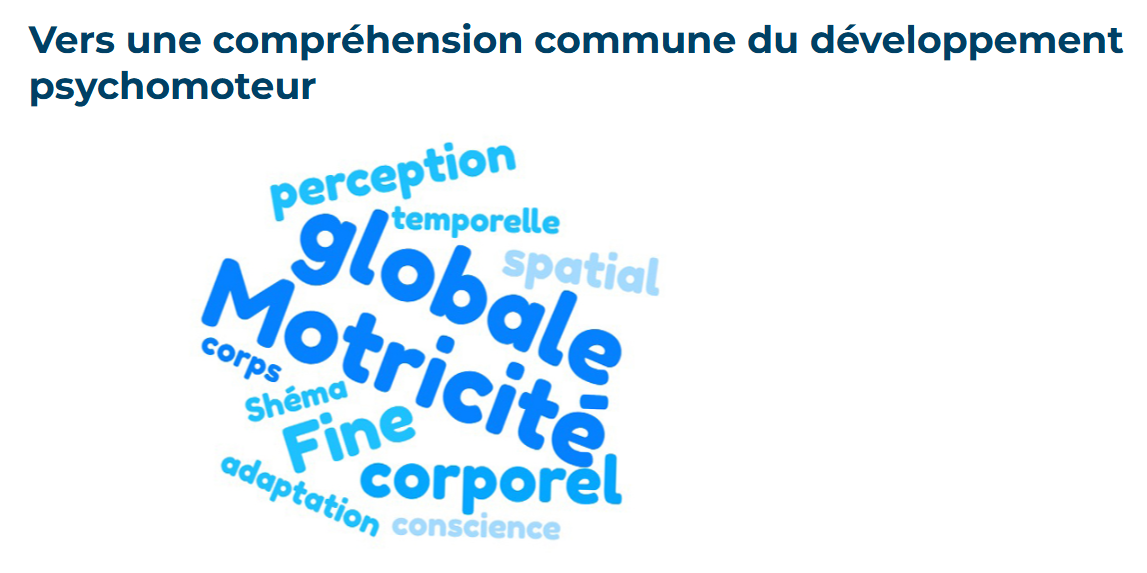
The definitions cover the major concepts of motor and psychomotor development: agility, motor learning, motor control, global development, dexterity, motor difficulties, motor skills, laterality, physical literacy, motor planning, psychomotricity, primitive reflexes and muscle tone. Each definition is offered in French and English to make exchanges easier between French-speaking and English-speaking communities.
Let’s take an example. Muscle tone is described there as the continuous, passive level of partial muscle contraction present at rest, which maintains posture, joint stability and a state of readiness for movement. It is a precise formulation, yet one that can also be explained simply to a parent. That is the whole point of the approach: a rigorous foundation that everyone can then build on in their own way.
What’s next?
The next steps include the plain-language adaptation of the definitions, with a team to be formed, a methodology and a timeline, followed by wide dissemination: the Observatory’s newsletter, a “Common Vocabulary” section of the ODMP library, the network of early childhood centres (CPEs) and educational childcare services, the kinesiology and physical and health education communities, TMVPA partners and the Ministère de l’Éducation.
This vocabulary is meant to evolve with knowledge and with the needs of the field. We invite you to consult it, to use it in your exchanges and to share your comments with us. The more of us who speak the same language, the easier it will be to support the motor and psychomotor development of every child.
Download the definitions
To keep these definitions or share them with your team, your family or your students, download the full document: Download the Common Vocabulary definitions